On this page7
Piano chords for beginners
Learn eight chords — C, G, Am, F, D, Em, A, and Dm — and you can accompany a huge share of pop, folk, and worship songs. Learn them in that order, three at a time, and you'll be playing a real song within your first couple of weeks of short daily practice.
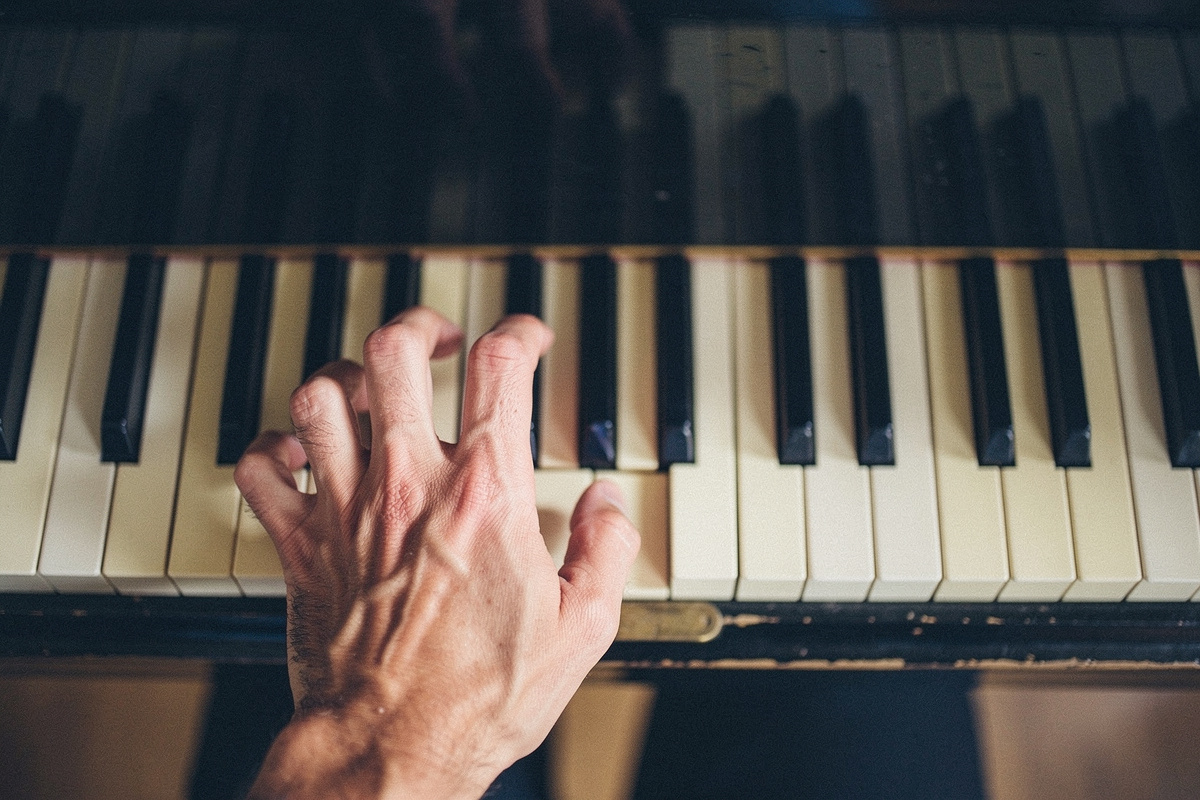
A chord is just three or more notes played together. On piano, the beginner version is the triad: a root note, the note two letter-names above it, and the note two above that. Play C, E, and G together and you have a C major chord. That's the whole idea. Everything below is about which triads to learn, how to hold them, and how to turn them into music instead of isolated shapes.
The chord reference table
Right-hand fingering is written 1-3-5, where 1 is your thumb, 3 is your middle finger, and 5 is your little finger. For the left hand the same shape is played 5-3-1, because your little finger takes the lowest note. Every chord below is in root position — the plain, unrearranged form.
| Chord | Notes | Right hand | Left hand | Sound |
|---|---|---|---|---|
| C major (C) | C – E – G | 1 – 3 – 5 | 5 – 3 – 1 | Bright, all white keys |
| G major (G) | G – B – D | 1 – 3 – 5 | 5 – 3 – 1 | Bright, all white keys |
| A minor (Am) | A – C – E | 1 – 3 – 5 | 5 – 3 – 1 | Sad, all white keys |
| F major (F) | F – A – C | 1 – 3 – 5 | 5 – 3 – 1 | Warm, all white keys |
| D major (D) | D – F♯ – A | 1 – 3 – 5 | 5 – 3 – 1 | Bright, one black key |
| E minor (Em) | E – G – B | 1 – 3 – 5 | 5 – 3 – 1 | Sad, all white keys |
| A major (A) | A – C♯ – E | 1 – 3 – 5 | 5 – 3 – 1 | Bright, one black key |
| D minor (Dm) | D – F – A | 1 – 3 – 5 | 5 – 3 – 1 | Sad, all white keys |
Notice the pattern in the fingering column: it never changes. Root-position triads all use the same three fingers. What changes is which keys those fingers land on — and that's a matter of the shape your hand makes, not of new technique.
Major vs minor, in one sentence each
Major chords sound bright and settled; minor chords sound darker and more wistful. The only difference is the middle note. In C major (C–E–G) the middle note sits four half-steps above the root. Move that middle note down one key — C–E♭–G — and you have C minor. That single key is the entire difference between happy and sad in Western music, and once you hear it you can't unhear it.
Learn them three at a time
Week 1: C, G, and Am
These three are all white keys and sit close together. Play C, then G, then Am, then back to C — slowly, four beats each, until the moves feel dull. Dull is the goal. Dull means automatic.
Week 2: add F
C–G–Am–F is one of the most-used progressions in popular music. Once you can loop it without stopping, you are technically able to accompany an enormous number of songs. Sing over it. Play it in a slow, even rhythm. It will already sound like something.
Week 3: Em, Dm, and the D and A shapes
Em and Dm expand your minor options. D and A each add one black key, which teaches your hand to sit slightly further into the keyboard — a small adjustment that makes every later chord easier.
Inversions: the thing that makes chords sound smooth
Jumping your whole hand from C up to F sounds lumpy and is slow to play. The fix is an inversion: play the same three notes in a different order so your hand barely moves. F major is F–A–C, but you can play it C–F–A instead — same chord, same notes, and if you've just played C major (C–E–G) your thumb doesn't move at all and your other two fingers shift one step.
Rule of thumb: pick the version of the next chord that keeps your hand closest to where it already is. This one habit is the difference between sounding like a beginner and sounding like someone who plays.
How to practise chords in 20 minutes
- 3 minutes — name and find. Say each chord out loud, find it, play it. No rhythm, just accuracy.
- 7 minutes — one hard change. Pick the single change you fumble most (often C to F) and play just those two chords back and forth, slowly, correctly, many times.
- 8 minutes — a song. Loop a real progression with your left hand playing the root note and your right hand playing the chord.
- 2 minutes — end on a win. Play a progression you already own, then note tomorrow's target.
That's the standard 20-minute routine with chords dropped into it. The structure matters more than the content — see how to practise piano for why slow repetition beats playing things through.
Common beginner mistakes
- Learning shapes without songs. Chords memorised in isolation fade. Attach every new chord to a song by the end of the same week.
- Practising only the chords, never the changes. The change between chords is the actual skill. Practise the transition, not the destination.
- Flat, collapsed fingers. Keep a gentle curve, as if holding a small ball. Flat fingers make black keys awkward and inversions painful.
- Speeding up too early. If you're making errors, you're practising errors. Slow down until it's clean, then creep up.
- Skipping the left hand. Even one root note per bar in the left hand transforms how full the music sounds.
Where chords fit in the bigger picture
Chords are the fastest route from nothing to music, which is why chord-first courses suit adults so well — you get a result before your motivation runs out. If you want that approach packaged as a full course rather than assembled yourself, Piano For All teaches in roughly this order; our Piano For All review covers who it suits and who it doesn't.
Reading music is the natural next step, not a replacement. Chords tell you what to play; notation tells you exactly when. Most adults are best served learning a little of both at once rather than finishing one before starting the other.
Back to piano basics for adult beginners