On this page4
A 20-minute piano practice routine that sticks
A good 20-minute session has four parts: warm-up (3 min), one focused skill (7 min), a song you like (8 min), and a cool-down plus log (2 min). Same order, every day.
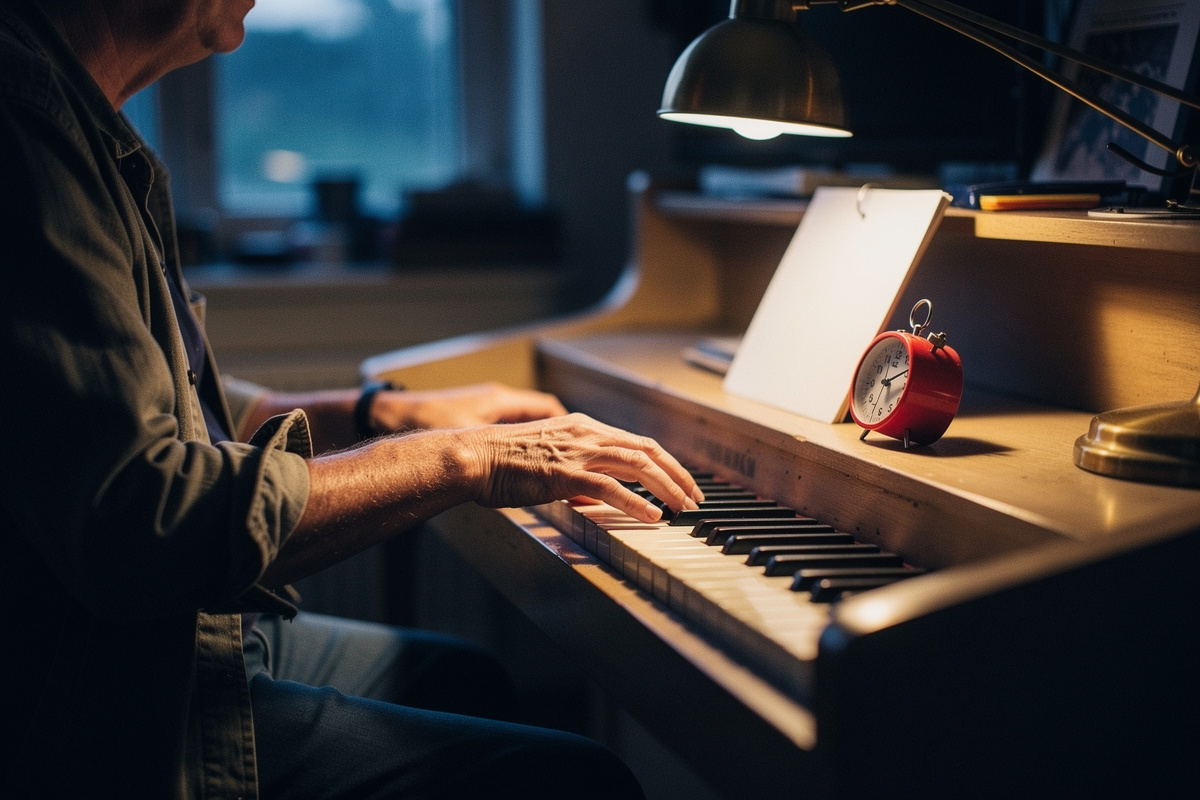
Most beginners don't fail for lack of practice time — they fail because "practice" means sitting down and playing the easy parts of one song until they're bored. A routine fixes that by giving every minute a job. Here's a structure that fits 20 minutes and actually moves you forward.
The four parts
1. Warm-up — about 3 minutes
Wake up your hands and ears. A five-finger pattern, a scale you're working on, or slow chord changes. The goal isn't a workout; it's shifting your brain into piano mode so the focused work lands.
2. One focused skill — about 7 minutes
Pick one thing that's currently hard: a chord change you fumble, a two-bar passage, keeping steady time. Play it slowly, correctly, many times. This is where real improvement happens — see how to practice piano for the technique that makes these seven minutes count.
3. A song you actually like — about 8 minutes
Play music you enjoy. This is your reward and your motivation, and it's where everything else comes together. It's fine if it's simple; it's essential that it's fun. This is the part that gets you back tomorrow.
4. Cool-down and log — about 2 minutes
Play something you already know well, so you end on a win. Then tick today's box and jot one line: what to pick up tomorrow. Tomorrow-you will thank today-you for removing the "where do I start?" friction.
Why the order matters
Warm-up primes, focused work improves, repertoire rewards, cool-down consolidates. Front-loading the hard part while you're fresh, then ending on something enjoyable, is what makes the session feel good — and a session that feels good is one you'll repeat.
Make it automatic
Attach it to an existing habit and keep the log visible. The streak is the secret: once you can see ten ticked days, missing day eleven feels worse than just doing it. The free 30-Day Plan hands you a filled-in version of this routine for every day, plus the log.
Turning the routine into a weekly schedule
The routine tells you what to do in a session. A schedule tells you when the sessions happen — and for adults that's usually the harder half, because a job, a family, and a tired evening all compete for the piano.
Anchor it to a habit you already have
Willpower is unreliable; habits aren't. Tie practice to something that already happens every day — right after your morning coffee, the moment you get home, while dinner's in the oven. "After X, I practice" beats "I'll practice at some point," which reliably becomes never.
Aim for most days, not every day
Five or six days a week is a sustainable target that still builds skill quickly. Planning for seven and treating a miss as failure is how people quit. Build in the reality that some days won't happen, and a missed day becomes a shrug instead of the end.
A sample week
| Day | Slot | Focus |
|---|---|---|
| Mon–Fri | 20 min, same daily anchor | Full routine: warm-up, focused skill, song, log. |
| Saturday | 30–40 min, if you have it | More time on repertoire — play for fun. |
| Sunday | Rest or a short noodle | Optional. Rest is part of the plan, not a failure. |
Protect the schedule when life hits
On the busy days, shrink the session instead of skipping it. Even five minutes keeps the habit and the streak alive, and a five-minute day is infinitely better than a zero. The goal is to never let the chain break — length can flex.