On this page5
How long does it really take to learn piano?
Learning piano has no single finish date. Pick a small goal, such as playing one easy song with a steady beat. Three months can be a useful review point, but it isn't a promise that every beginner will reach the same level.
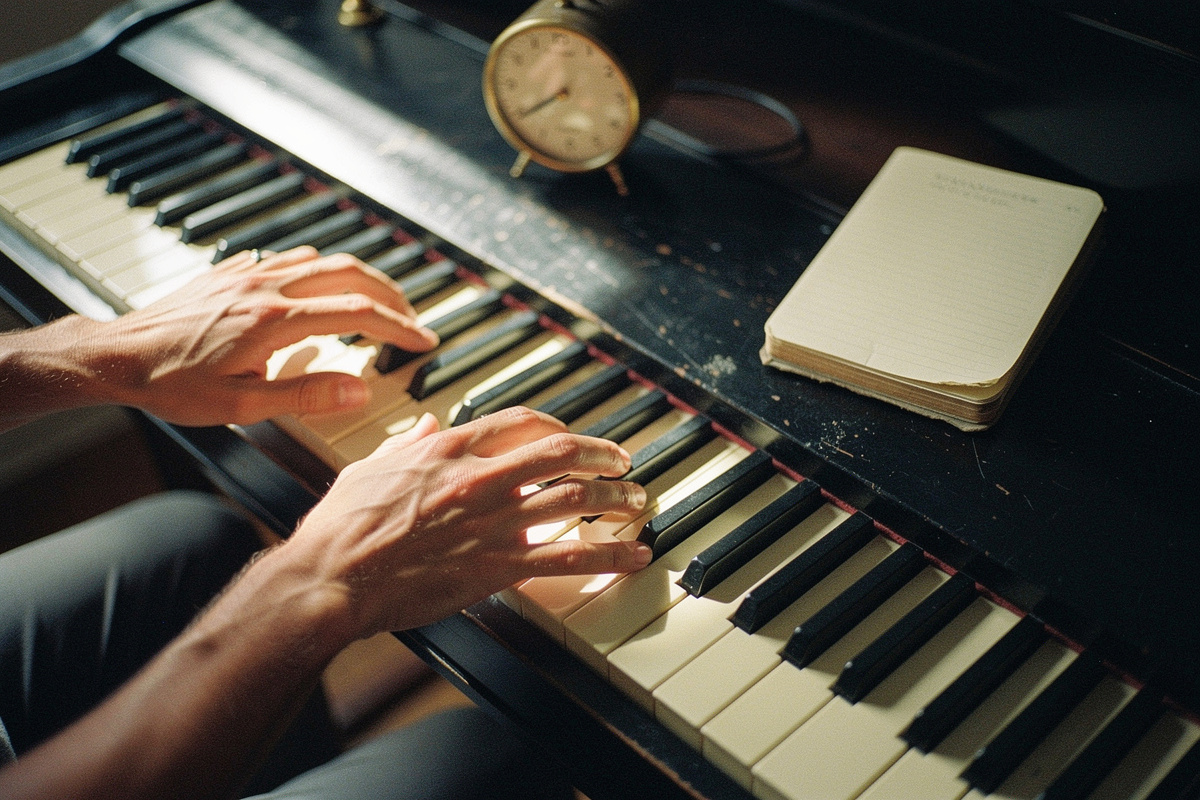
Your first song and fluent sight-reading are different goals. A chord-based version may suit a sing-along; reading a full score asks for another skill. Choose the task before you choose a deadline.
Checkpoints instead of fixed timelines
| Goal | Check it this way | Next step |
|---|---|---|
| A short melody | Play one phrase without stopping. | Add the next phrase at the same slow speed. |
| Two hands | Keep a simple left-hand part under the melody. | Join two small sections. |
| A complete song | Finish the easy version with a steady beat. | Record it and work on the roughest bar. |
| Reading new music | Name the pitches and clap an unfamiliar line. | Play it slowly without guessing from memory. |
What actually changes the speed
- Frequency over duration. Daily short sessions build skill faster than occasional long ones, because piano is muscle memory and memory needs repetition close together.
- Focused vs. mindless. Ten minutes spent slowly fixing one tricky bar beats an hour of playing the easy parts again. See how to practice piano.
- Song choice. Practicing music you love keeps you coming back, and coming back is the whole game.
- A plan. Knowing what to do each day removes the friction that ends most attempts in week two.
The timeline is most useful when it changes what you do next: aim for one song in the first month, a dependable practice habit by three months, and a broader mix of reading, chords, and repertoire over the following year. The 20-minute practice routine gives those sessions a repeatable shape.
The part nobody mentions
Progress isn't linear. You'll have a week where nothing clicks, then a day where something that felt impossible suddenly works. That plateau-then-jump pattern is normal and expected — the people who "learn fast" are usually just the people who didn't quit during a plateau.
Can you learn piano in three months?
Use three months as a planning window. Choose one easy song and a version that fits your current skill. A one-hand melody is a valid first goal. Add a simple left-hand part once the melody stays steady.
- First, learn a small section. Play each hand alone. Keep the beat slow enough that you don't stop to find the next pitch.
- Then join the hands. Work on one short section, rather than starting the whole song again after every slip.
- At your review, play from start to finish. Record it. Listen for pauses and rushed beats, then choose one passage for the next session.
This is a sample plan, not a test you must pass by a fixed date. If you need help fitting it around work, use the adult beginner guide. Compare piano apps and courses if you need lessons to follow.
What to do when progress stalls
If each hand works alone but they fall apart together, shorten the passage. Play just one beat with both hands, then add the next. If the rhythm slips, clap it before playing. Write down the exact bar to return to tomorrow.
For more on slow practice and small sections, see flowkey's practice guide. Measure progress by what you can play with fewer stops, rather than a label such as intermediate.