On this page7
How to learn piano as an adult
Start learning piano as an adult by picking one goal and a time you can keep. Use an instrument you can practise on at home. Follow one lesson path, work on a small section and write down what to do next.
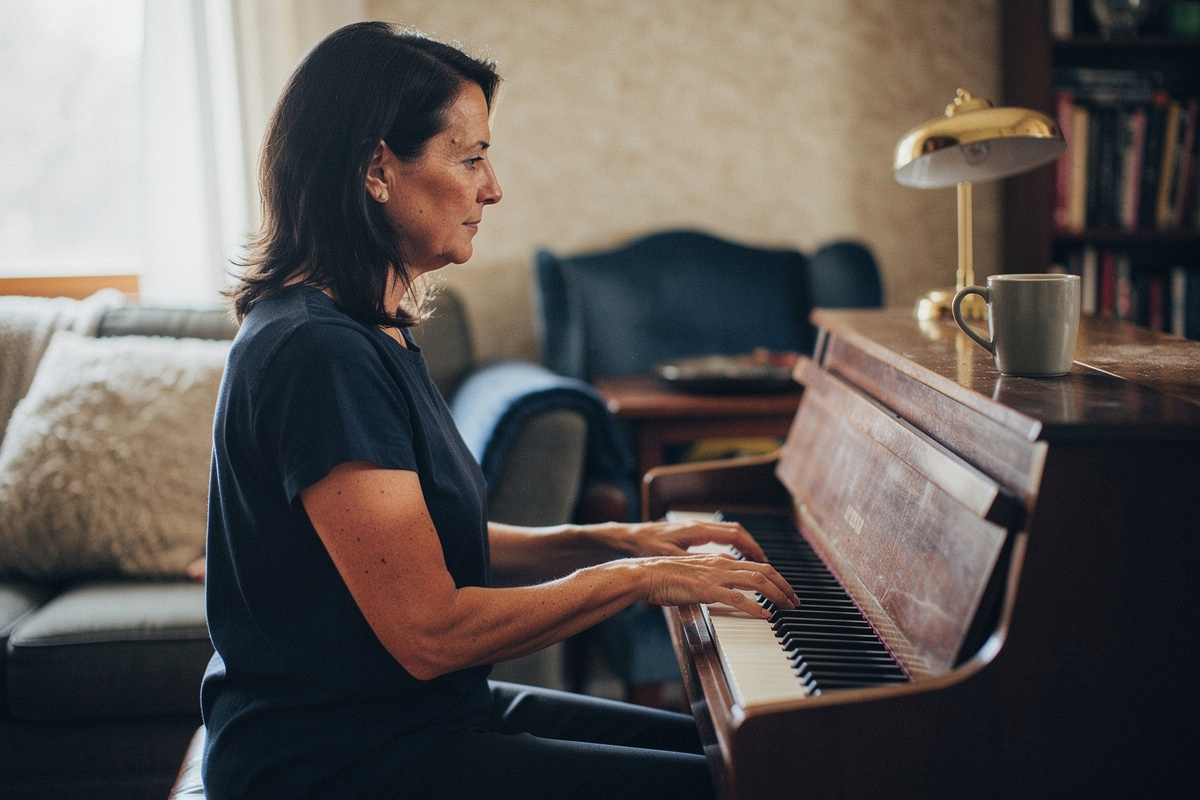
Pick a reason to play: a song, a style or a skill you want to learn. You can work on a simple piece while learning the basics it needs. Use the steps below to choose your first task and a practice time.
1. Get the right instrument (you need less than you think)
An ideal setup is an acoustic piano or 88 weighted keys: keys that push back like a real piano and leave room to grow. But a smaller or unweighted keyboard can still be a viable starter if it is what you can practise on consistently. Add a bench at the right height and a sustain pedal when you're ready; do not let perfect equipment delay your first month.
2. Match your first skill to your goal
For song accompaniment, begin with a few chord shapes and practise moving between them to a steady beat. If your goal is to play from a score, begin with a short reading exercise. Neither path requires you to learn everything before you play your first simple phrase.
Choose your first goal before choosing a method: accompanying songs, reading notation, playing by ear, or building a general foundation. Chords-first is a useful site path for quick wins, not a rule that every adult must follow. If apps appeal to you, compare their different teaching styles in flowkey vs Simply Piano.
3. Build the habit before you chase the skill
Twenty minutes a day beats two hours on Sunday, every time. Attach practice to something you already do — after your morning coffee, before dinner — so it runs on autopilot. Progress on piano is quiet and cumulative; the habit is what carries you through the weeks where it doesn't feel like much is happening. This is exactly what the free 30-Day Plan below is built to do.
4. Structure each session
A good 20-minute session has four parts: a short warm-up, one focused thing you're trying to improve, time on a song you actually like, and a moment to tick the box and note what to pick up tomorrow. The 20-minute practice routine guide breaks this down step by step.
5. Decide what to learn from — later, not first
You don't need to buy anything to start. When you're ready for structure, a one-time course or a subscription app can help — we compare them honestly in course vs apps. Start free, build the habit, then spend money on the path that fits how you like to learn.
Teacher, app or self-study?
A teacher can watch how you sit and move, hear your timing and help you choose music. An app or course gives you lessons to follow at home. If you study alone, record a short passage so you can hear where the beat slips.
Ask a teacher how they work with adult beginners. Bring one song goal and explain the practice time you have. For self-study, try a lesson before paying and check that you understand what to do after the video ends.
A first-week plan you can adapt
- Set up the seat and music stand so you can read without leaning forward. Find a quiet time for a short session.
- Pick an easy melody or a few chord shapes. Work slowly on one small part.
- Repeat that part, then add a little more. Stop before your hands feel tired.
- At the end of the week, record your attempt and choose one task for the next week.
This is a sample schedule, not a promise to finish a song in seven days. Missed sessions don't require a catch-up marathon. Start again with the last small part you could play.
If age is your main worry, read starting piano later in life. Set goals with our piano learning checkpoints instead of comparing your speed with another beginner.