On this page5
Are you too old to learn piano?
You don't need to have started as a child to take piano lessons. Pick an easy goal and a setup that feels comfortable. A complete beginner needs a different first lesson from someone returning after a long break.
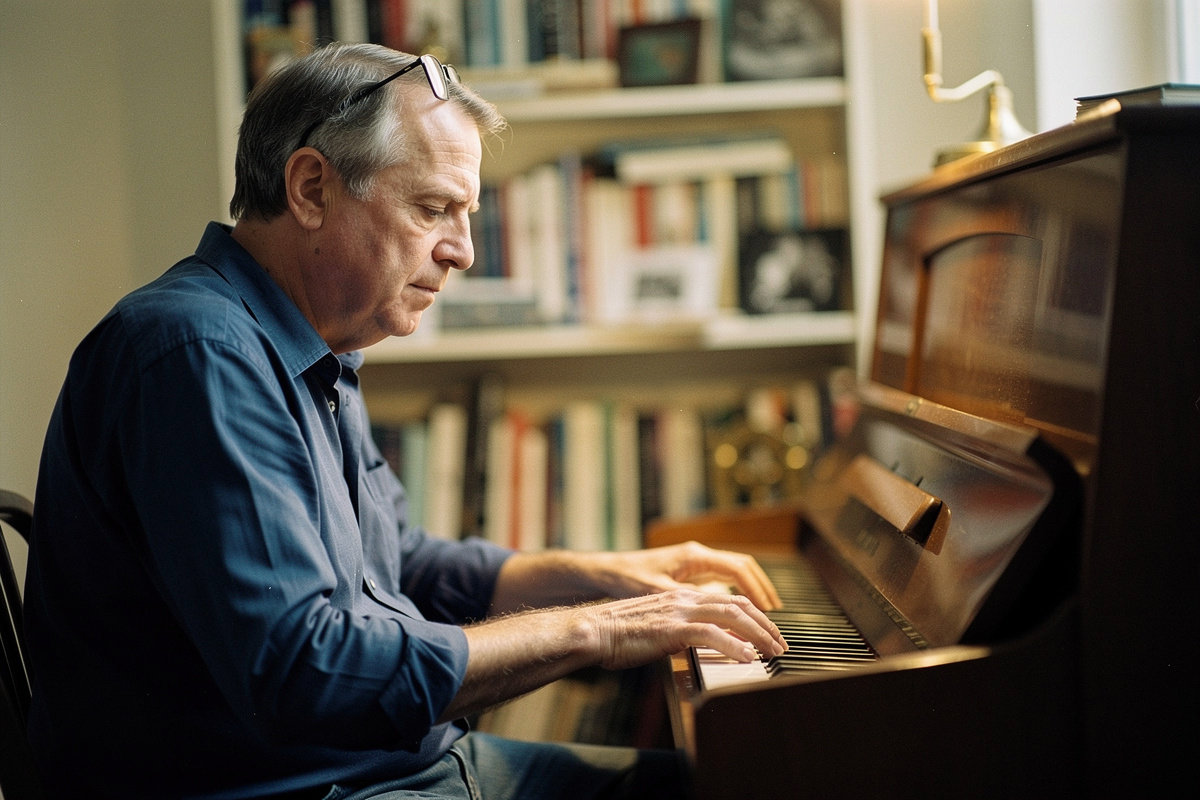
Ask anyone who started as an adult and stuck with it: the age worry is the biggest thing standing between people and the piano, and it's almost entirely a myth. Let's take it apart.
What adults are actually up against (and it isn't age)
- Time. A job and a life compete for the 20 minutes. That's a scheduling problem, not a talent problem — and it's solvable with a routine.
- Self-consciousness. Adults judge their own beginner sounds harshly. Kids don't, which is their real advantage. The fix is to practice privately and measure yourself against last week, not against a video.
- Impatience. Adults want to be good now. Expecting the plateaus (see how long it takes) removes most of the frustration.
Where adults are actually better
Adults bring useful context: you can grasp why a chord works, break a hard passage into pieces, and practise a specific weakness on purpose. Those are advantages, but they do not make adult progress automatically faster. A realistic routine matters more than comparing your speed with a child’s.
So how do you actually start?
The same way at any age: a weighted keyboard, a few chords, and 20 minutes a day on songs you like. Pick a plan, follow it, and let a month of ticked boxes answer the "too old?" question for you. The free 30-Day Plan below is built for exactly this.
Start with the adult beginner path and use the timeline guide to set expectations you can actually live with.
Starting at 30, 35, 40, 50, 60 or later
Your age alone doesn't tell you which lesson to start with. If you've never played, begin with a short melody and learn to count its beat. If you played years ago, try an easy piece and see which parts you still remember.
For a returning player, start below your old playing level. Check each hand alone before joining them. For a new player, use the sheet music guide to read one simple line at a time.
Make the setup fit you
- Put the score where you can see it without hunching over. Use a larger print version if small symbols are hard to read.
- Keep the seat stable and give your feet a firm place to rest. Ask a teacher to check your sitting position.
- Split practice into short parts if a longer session feels tiring. Stop if playing hurts and get advice before pushing through it.
Try one small goal, such as a slow melody you enjoy. Review it against your own last attempt. The learning checkpoints help you choose a next step without treating a birthday as a deadline.
Yamaha's adult piano course accepts beginners with no prior music experience. Ask any local teacher about their adult lessons and how they adapt the pace.